From Code Reader to Intent Architect
November 27, 2025
The job is changing.
When agents write the code, you stop reading every line. You can't. There's too much, moving too fast. The old model of reviewing, understanding, and approving each change doesn't scale.
But you still need to know it's right.
So the job shifts. Instead of reading code, you define what "right" means. Instead of catching bugs in review, you encode constraints upfront. Instead of asking "what did this do," you validate whether it did what you intended.
You become an Intent Architect.
What that means in practice
You document intent before agents start building. Not specs. Not tickets. The actual purpose. Why this exists, what it should accomplish, what constraints matter.
You validate implementation against that intent. Not by reading every line, but by seeing whether the execution matched the design. Visual tools, drift detection, alignment checks.
You measure coverage. How much of your system has verified intent behind it? This is the part that surprises people. Once you see that number, you realize how often you were trusting vibes instead of verification.
This isn't about doing less.
It's about doing earlier. The work moves upstream. You're shaping the environment agents work within. Encoding intent. Defining guardrails. Maintaining feedback loops. Some days it feels like you're designing the playground instead of playing on it. But that's the leverage.
Better environment, better agent output. Better agent output, more time to refine the environment. That loop is where the speed actually comes from.
The old role: Read code. Find problems. Fix them.
The new role: Define intent. Validate alignment. Measure coverage.
The developers who make this shift will thrive. The ones still trying to read every line will drown.
What we're building
This is why we're creating Visual Validation. A tool that lets you see whether what was built matches what you intended.
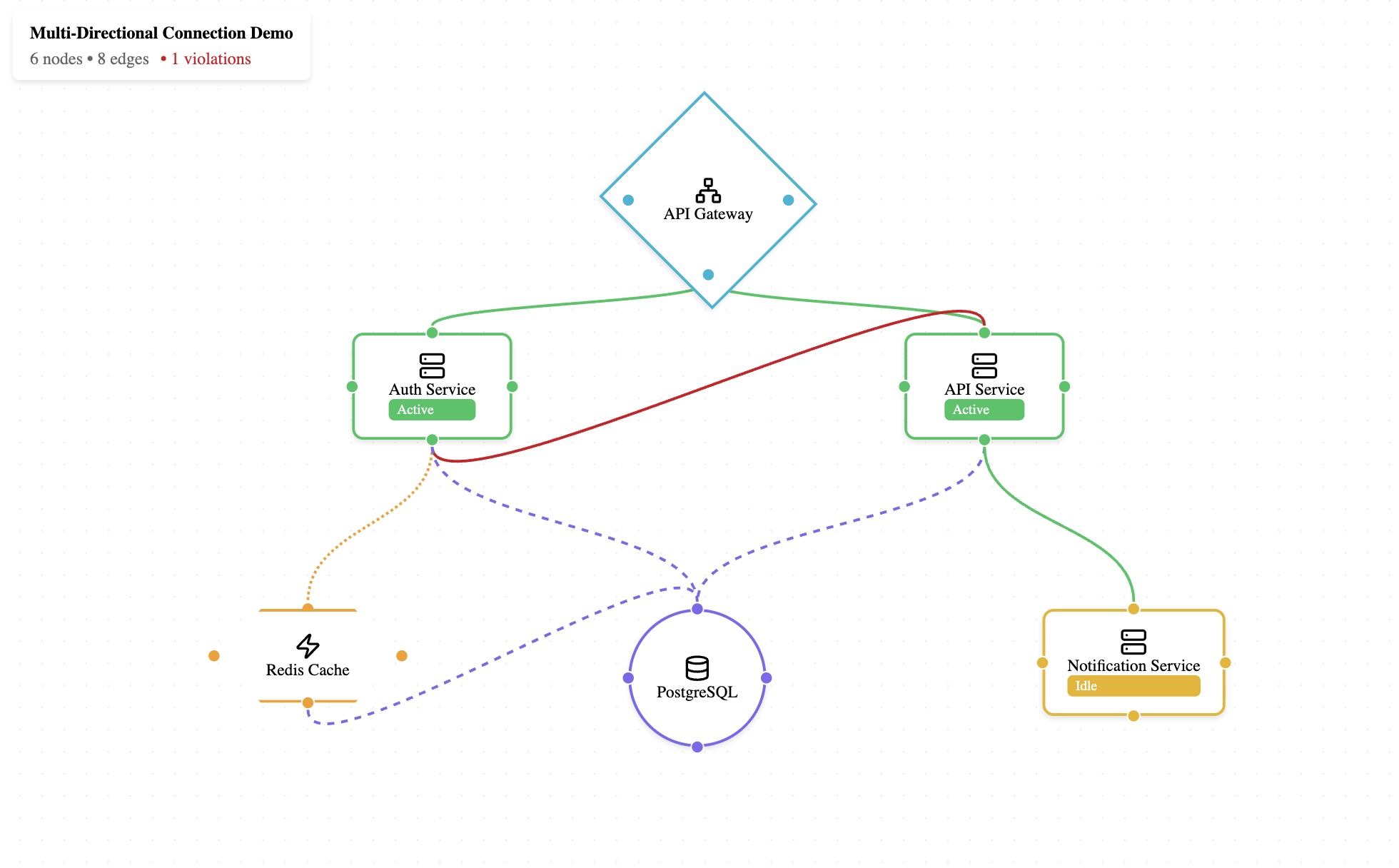
Early preview: drift detection flagging an undocumented connection between services.
It's not ready yet. But it's close. Architecture diagrams animated with real log data. Violations surfaced visually. Intent coverage you can measure.
Intent-Driven Development is the methodology. Visual Validation is the tool. Intent Architect is what you become when you put them together.
The job was reading code. The job is defining intent.
Agents won't replace that. They depend on it.
More soon.